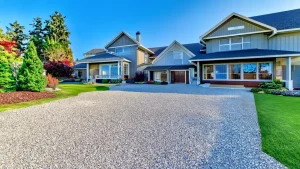
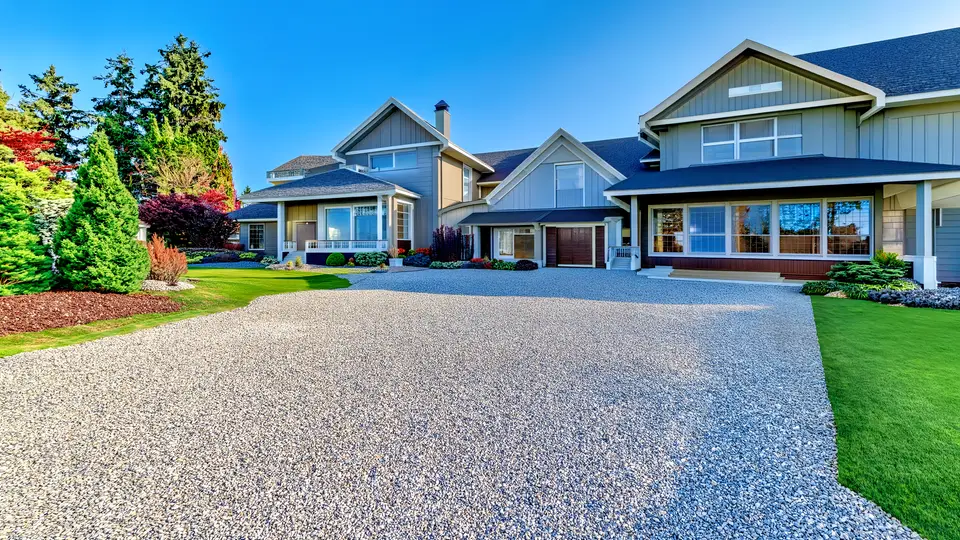
A gravel driveway is one of the most practical and cost-effective choices a Central Coast homeowner can make. It drains well, handles vehicle traffic, suits a wide range of property styles, and can be installed as a DIY project with the right materials. Where most gravel driveways go wrong is not in the top layer but in what sits beneath it. Getting the base right separates a driveway that holds up over years from one that becomes rutted, soft or waterlogged after the first wet season.
Why Gravel Makes Sense on the Central Coast
The Central Coast sees a mix of warm, dry summers and wet winters. A well-constructed gravel driveway handles both ends of that spectrum effectively. Unlike concrete or asphalt, gravel allows water to drain through the surface rather than pooling on top, reducing runoff and keeping the driveway usable after heavy rain. It is also significantly more affordable than paved or concreted alternatives, and far easier to repair if one section needs attention.
For properties with long access drives, irregular shapes, or existing tree root systems that would crack a rigid surface over time, gravel is often the only sensible choice.
The Materials a Gravel Driveway Actually Needs
A durable gravel driveway is not just a load of gravel tipped onto bare ground. It is a layered system, and each layer serves a specific purpose.
Road Base Sub-Base
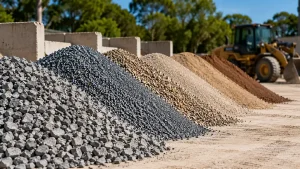
The foundation layer is compacted road base, also called quarter minus. This is a blend of crushed rock particles and blue metal fines that locks together tightly under compaction, forming a firm, load-bearing base. For a standard residential driveway, road base is typically laid and compacted to a depth of 100mm. On soft or poorly drained ground, 150mm is a more reliable starting point.
Without this layer, gravel sits directly on soil, which compresses under vehicle weight over time. The result is ruts, soft patches and gravel that gradually disappears into the ground.
Geotextile Membrane
A geotextile fabric laid between the soil and the road base prevents two problems. It stops the sub-base material from gradually mixing with the soil beneath, which weakens the base over time. It also suppresses weed growth from below. For most residential driveways, a non-woven geotextile is sufficient and straightforward to lay before the road base goes down.
Gravel or Blue Metal Top Layer
The visible surface layer is where appearance and function come together. Options vary depending on the look and performance required.
- 20mm blue metal provides a clean, angular surface that compacts reasonably well and drains excellently
- 14mm blue metal is a popular choice for residential driveways, offering good compaction and a slightly finer finish
- Decorative pebbles and gravel can be used as a finishing layer where appearance is a priority, though they are less stable under heavy vehicle traffic than blue metal
For most residential use, 14mm or 20mm blue metal at 75 to 100mm depth over compacted road base gives a functional, long-lasting surface. The Build Australia guide to gravel driveways covers installation stages and material selection clearly for anyone working through the planning process.
How to Calculate How Much Material You Need
Getting quantities right before ordering avoids short deliveries and unnecessary return trips. The basic calculation involves multiplying the length by the width by the required depth of material, which gives a volume in cubic metres.
For example, a driveway 15 metres long by 3.5 metres wide requiring 100mm of road base would need approximately 5.25 cubic metres of road base, plus a similar volume calculation for the gravel top layer. On soft ground, those figures should be increased by 10 to 15 percent to account for compaction loss.
The team at Kincumber Sand and Soil are happy to help run through quantity calculations over the phone before an order is placed. For the full range of aggregate supplies and gravel options available, visit the aggregate supplies page on the website.
Edging Keeps a Gravel Driveway in Shape
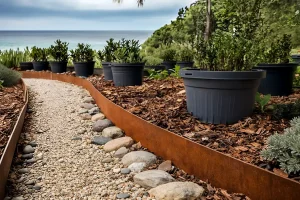
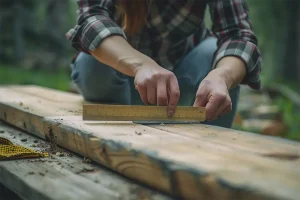
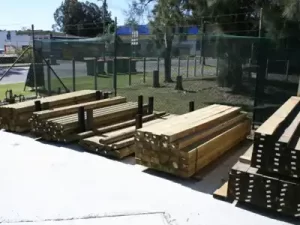
Without defined edging, gravel spreads outward under foot and vehicle traffic, narrowing the driveway and creating ragged edges over time. Treated pine sleepers, concrete edging or steel garden edging all work well as a containment border along both sides before the gravel goes in. Edging makes a significant difference to how tidy the finished driveway looks.
Sourcing the Right Materials on the Central Coast
Kincumber Sand and Soil stock a comprehensive range of sand and gravel and aggregate materials for driveway and construction projects, all available from the drive-through yard at 4 Kerta Rd, Kincumber. Road base, blue metal in multiple sizes and drainage materials are all kept in stock, and delivery is available across the Central Coast for larger orders.
Whether the project is a short front entry driveway or a long rural access road, the team can advise on the right product combination and help with volume calculations to make sure the right amount is ordered the first time.
Talk to the Team Before You Order
Call Kincumber Sand and Soil on (02) 4368 1252 or visit the yard at 4 Kerta Rd, Kincumber. Open Monday to Friday 6:30am to 4:00pm and Saturday 6:30am to 12:00pm. For the full range of landscape supplies in Kincumber, visit the website or stop in for a chat.