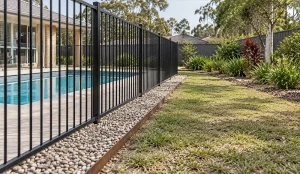
Pool fence landscaping on the Central Coast runs on one rule that catches out more gardens than any other: the 90cm non-climbable zone. Harmless-looking plants, pots and garden beds can give a child the step up a fence is meant to stop. Get the layout right from the start and the garden softens the fence without undoing it.
Here is what the rules say, why ground level matters and which materials suit a pool barrier. For the stone side of a pool surround, decorative pebbles for gardens covers colours and sizes in detail.
What Does The 90cm Non-Climbable Zone Mean?
It is a clear space on the outside of the fence that nothing climbable may sit in. The NSW Government’s pool owner obligations page measures it as an arc from the top of the pool fence, curving down towards the ground. It names the things that must stay out of it:
- Trees and shrubs
- Barbecues and pot plants
- Toys, ladders and chairs
The same page extends it 30cm inside the pool area. That strip must also stay clear of any potential footholds or handholds.
Garden Beds And Sleeper Walls
The page covers “any other objects” as well, so treat a raised garden bed or a low sleeper wall the same way. After all, either one can give a child a step up, which is exactly what the zone exists to remove. For that reason, keep raised beds and retaining walls well outside the arc. On a sloping block, treated pine sleepers on the Central Coast explains when NSW requires approval for one.
Plants That Grow Into The Zone
A shrub planted outside the arc can still grow into it. So plant with the mature size in mind and prune before branches reach the zone. The same page also says the fence must be well maintained and in good working order. Overgrown planting works against that.
Why Does Ground Level Matter Beside A Pool Fence?
Because both key fence measurements start at the ground. The NSW Government’s pool owner obligations page sets the fence at a minimum of 1.2 metres, measured from the finished ground level. It also allows no gap at the bottom bigger than 10cm from that same finished ground level.
Topping Up Pebbles Or Mulch
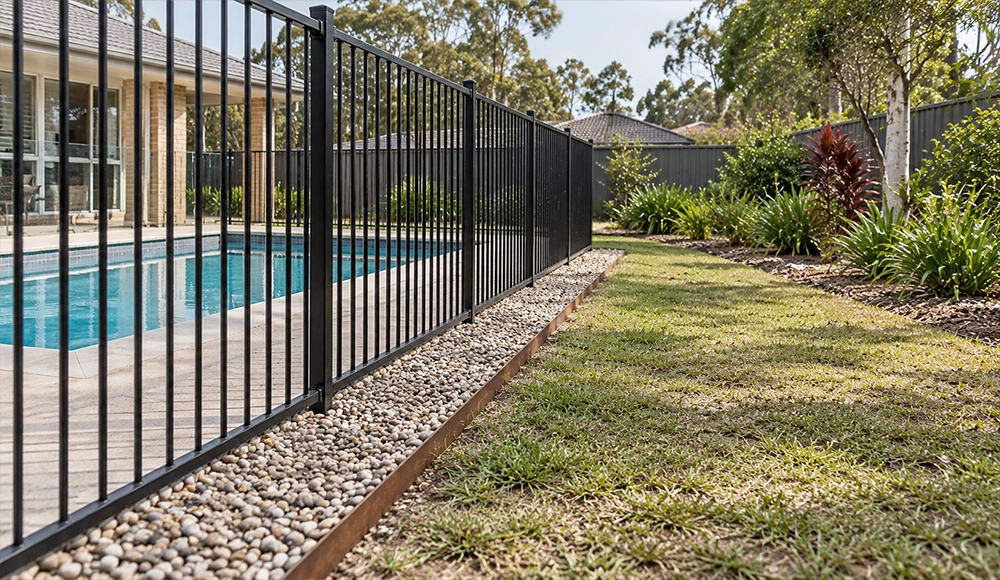
Every top-up raises the ground, however small. As a result, a fresh layer of mulch or a deep bed of pebbles against the fence can shave height off the barrier without anyone noticing. So keep any surface finish against a pool fence thin, level and topped up only to its original height.
When The Ground Washes Away
The opposite problem shows up after heavy rain. As soil or stone washes out from under the bottom rail, the gap grows. March carries a median of 150.4mm on the Bureau of Meteorology’s Gosford record, nearly three times October’s 55.6mm. So check the gap after the autumn rain.
Holding The Level With Edging
A defined edge stops the surface creeping in either direction. Central Coast Council’s landscaping standard drawings show mulch and mown turf finishing flush with the edging, which holds a garden at a set level. A low run of SHAPESCAPER steel garden edging, set back from the fence, does that job in steel rather than timber.
What Works Well Around A Pool?
Flat, hard-wearing surfaces that stay at ground level. Good pool fence landscaping on the Central Coast keeps the hard surfaces close to the barrier and the planting further back.
Pebbles On A Firm Base
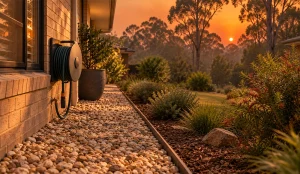
Decorative pebbles suit a pool surround because they sit flat and give a child nothing to climb. Underneath, a compacted base of ¼ Minus (Crusher Dust) keeps them firm and level.
Planting Beyond The Arc
Low groundcover and garden beds belong outside the 90cm arc. That way they soften the view of the fence without becoming a step.
Who Can Build Landscaping Beside A Pool Fence?
A licensed contractor, once the job passes a set value. The NSW Government’s page on structural landscaping work lists retaining walls, fencing and paving among the jobs covered. It requires a contractor licence for residential work valued at more than $5,000 in labour and materials, including GST.
Getting The Pool Fence Certified
In addition, Council can inspect the barrier and certify it. Central Coast Council’s application for a pool barrier certificate quotes the Swimming Pools Act: a certificate of compliance stays valid for three years. Selling or leasing a property with a pool brings its own certificate requirements, which the NSW Government’s pool owner obligations page sets out. For that reason, check any landscaping changes before an inspection rather than after. Council’s customer service line is (02) 4306 7900.
Planning The Garden Around A New Pool?
Sketch the fence line, mark the 90cm arc on the outside and plan the planting beyond it. The team can then work out the pebbles, the base and the edging for the strip in between. Contact Kincumber Sand & Soil or call (02) 4368 1252.