Preparing veggie patch soil on the Central Coast is a spring job, and almost all of the work happens before a seedling goes in. Ground you have checked, fed and loosened gives summer crops something to grow into. Ground you have only turned over gives them a slow start.
So this covers four steps in order. Check the ground is safe to grow food in, work out what kind of soil you have, dig in the right material and time it around the local season. Filling a raised bed instead? What goes into a raised garden bed covers that separately.
Is Your Veggie Patch Soil Safe To Grow Food In?
Most likely, but an older house or a nearby busy road is reason to test first. Macquarie University’s VegeSafe findings reported high lead levels in more than 35 per cent of the 3,600 Australian gardens that sent in samples. The highest readings came from older properties, homes with painted timber and gardens beside busy roads, where leaded petrol left its mark before the 2002 ban.
The NSW EPA’s guidance on gardening where soil may contain lead explains why. It names lead-based paint on houses built before 1970 as a source, and it says the first step is to test your soil.
Getting Your Soil Tested
Send samples to VegeSafe. Macquarie University’s citizen science program analyses home garden soil for trace metals and returns a personalised report with gardening advice. Its findings point to the Australian guideline of under 300 milligrams of lead per kilogram as the test for whether soil suits vegetables.
When Lead Levels Come Back High
Grow up rather than down. The EPA advises a pot or raised bed for vegetables, because some plants absorb lead from the soil. It sets out three requirements for that bed:
- At least 30cm tall, and higher for large plants
- Lined with mesh at the bottom, so it drains without the soils mixing
- Filled with certified clean soil
Meanwhile, cover any bare ground you are not using with grass or mulch so nobody is handling it.
What Kind Of Soil Are You Starting With?
Sandy, clay or somewhere in between, and each one needs a different fix. The ribbon test uses a handful of damp soil to tell you which one you have.
Sandy Soil
Add organic matter, not more sand. Water and nutrients run straight through sand, so compost and aged manure give it something to hold on to. NSW DPIRD’s healthy soil guide calls organic matter the lifeblood of productive garden soil. It also warns that a soil without it is a starving soil.
Clay Soil
Open it up gradually. The same guide advises digging sand into clay whenever you work it, together with plenty of organic matter and mulch, and promises gradual improvement rather than an instant fix.
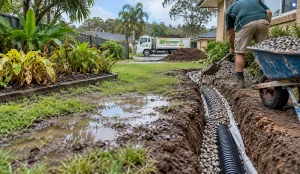
Before tipping sand in, read what happens when you mix sand with garden soil, because the grade and the amount both matter. If the bed still sits wet after rain, the problem is drainage rather than soil, and garden drainage solutions covers the options.
Checking Soil pH For Vegetables
Test it with a kit. The DPIRD guide puts the range that suits most vegetables at pH 5.5 to 6.5 on a kit test. Where the soil is very acid, it says lime should go in at least a week before planting.
What Should You Dig Into A Veggie Patch?
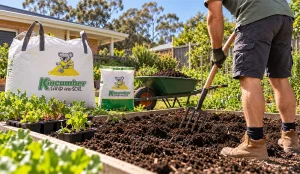
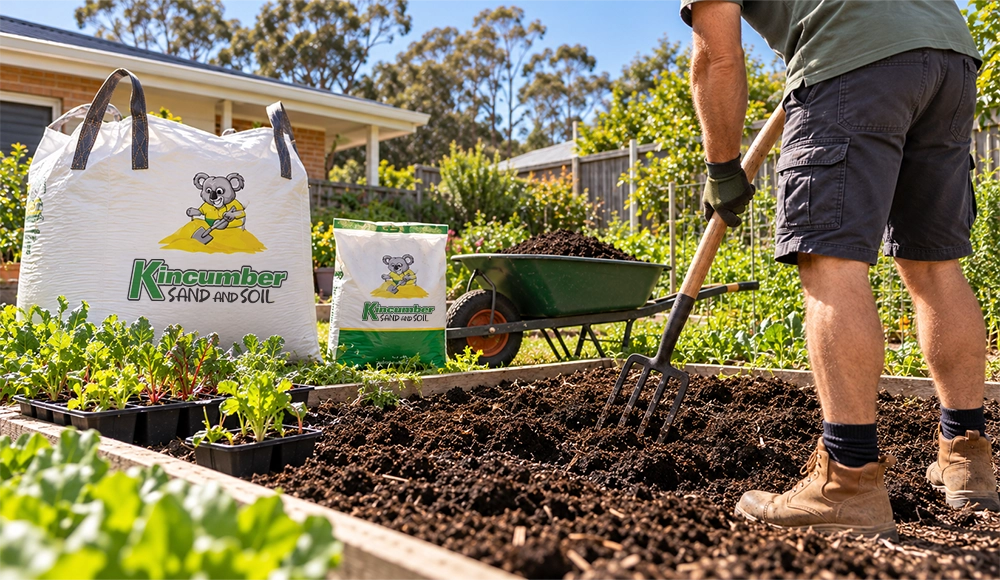
Composted organic matter, worked through the top of the bed. Kincumber Sand & Soil bags four options that suit a smaller patch:
- Mushroom Compost, 25 litre bag
- Cow Manure, 25 litre bag
- Cow & Compost, 30 litre bag
- Active 8 Soil Improver, 30 litre bag
Where the bed needs building up as well as feeding, Premium Garden Mix comes by the cubic metre or in 30 litre bags. The yard lists it as soil, coarse sand, graded ash, coco peat and composted organics. For a slow feed on top, Blood & Bone comes in 25kg bags.
Composted Manure, Not Fresh
Raw manure can carry harmful pathogens. The NSW Food Authority’s fact sheet on using manure says untreated poultry and cattle manures can contain them. Its advice is to use only manure that has gone through a thorough composting, since the heat also kills weed seed and plant disease.
That fact sheet addresses commercial growers. Even so, the logic carries straight into a backyard bed of lettuce and herbs eaten raw.
Check The Bag For AS 4454
Look for the standard on the label. The same fact sheet says commercial products should meet AS 4454-2012, and it counts anything that does not as untreated manure. If the bag does not say, ask before you buy.
How Deep To Dig In Compost
Through the root zone, without overworking it. Central Coast Council’s landscaping standard drawings put topsoil for mass plantings at 200mm to 300mm, which makes a fair benchmark for a vegetable bed. Spread the compost over the surface, then fork it through that depth.
Stop once it is evenly mixed, though. The DPIRD guide warns that too much cultivation damages soil structure. Council’s drawings also rule out compacting topsoil by any means beyond light firming, so water the bed in rather than treading it down.
When To Prepare Veggie Patch Soil
Before the seedlings go in, not around them. The Food Authority fact sheet advises applying compost before planting or early in growth and working it into the soil. As a result, preparing veggie patch soil on the Central Coast belongs at the start of the spring planting rather than halfway through it.
Local conditions favour spring as well. The Bureau of Meteorology’s climate averages for Gosford show mean maximum temperatures climbing from 22.3 degrees in September to 24.3 in October and 25.2 in November. Median rainfall is lighter too, at 50.8mm in September and 55.6mm in October, against 150.4mm in March.
Once The Veggie Patch Is Planted
Mulch it lightly, water it in and wash what you pick. Baled mulch suits a vegetable bed because it breaks down and feeds the soil as it goes. The yard sells Sugar Cane Mulch and Lucerne Mulch in bales. For the reasons a coarse chip is the wrong choice here, see how to choose the right mulch.
Under Central Coast Council’s Water Wise Rules, you may run sprinklers and watering systems as needed for 14 days from installation. After that, they run before 10am or after 4pm.
Finally, the EPA guidance notes that lead dust in the air can settle on vegetables. So rinse the harvest before eating it, especially on an older block.
Not Sure What Your Patch Needs?
Describe the soil and the size of the bed, and the team can match it to a product and a quantity, from a few bags to a bulk load. Contact Kincumber Sand & Soil or call (02) 4368 1252.