
Knowing when to fertilise a lawn on the Central Coast saves both money and fertiliser. Feed it while the grass is growing hard and it turns the feed into growth. Feed it before heavy rain or across bare paving, and some of it washes into the stormwater instead.
So this covers the timing, which product suits a lawn, how much to spread and where Bindii fits into it. If the lawn is also uneven or patchy, top dressing solves a different problem, and the two jobs often go together in spring.
When Should You Fertilise A Central Coast Lawn?
In spring, once the grass is growing strongly, then about every three months after that. The Bureau of Meteorology’s climate averages for Gosford show why spring is the starting point. Mean maximum temperatures climb from 19.4 degrees in August to 22.3 in September, 24.3 in October and 25.2 in November.
Signs Your Lawn Is Ready For A Feed
Watch the mower. When you are cutting more often than you were through winter, the lawn is growing and can use a feed. A lawn that has barely moved since July can wait a few more weeks.
How Often To Fertilise The Lawn
Follow the bag. Terra Firma Fertilisers’ Grassmaster product page gives a rate for every three months. So when to fertilise a lawn on the Central Coast is really a question of when to start, with spring the first feed of several.
Which Fertiliser Suits A Lawn?
One made for lawns rather than a general garden feed. The yard stocks Grassmaster in 25kg bags. Its maker lists the analysis as 10.5 per cent nitrogen, 2 per cent phosphorus and 8 per cent potassium.
How Much Lawn Fertiliser Per Square Metre
Between 50 and 100 grams per square metre, according to that same product page. For larger lawns it gives 5 to 10kg per 100 square metres. At those rates, a 25kg bag covers roughly 250 to 500 square metres per application, so measure the lawn before buying a second bag.
Spreading Fertiliser Evenly
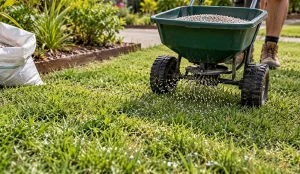
Even coverage matters more than the exact gram. Split the amount in half, then walk the lawn once lengthways and once across it.
Organic Lawn Fertiliser Options
Two organic feeds sit alongside it. The yard also sells Blood & Bone in 25kg bags and Pure Manure, a chicken manure, in 30kg. Rates vary between products, so use the one on the bag.
Keep Lawn Fertiliser Off Native Beds
Lawn fertiliser should stay on the lawn. NSW DPIRD’s healthy soil guide states that native plants are very sensitive to phosphorus. Grassmaster carries 2 per cent phosphorus, so keep it clear of a grevillea or banksia border.
Does Fertilising The Lawn Help With Bindii?
Indirectly, and spring is the season it matters. Central Coast Council’s weed control page says Bindii germinates in autumn, grows slowly through winter and sets seed in late spring and summer. It also says a thick Buffalo lawn keeps the light off Bindii seed, which stops it germinating.
When To Treat Bindii
In autumn and winter, not now. The same Council page puts the first herbicide treatment in April or May, with a follow-up in July. For hand removal, it suggests July, before plants set seed. As a result, spring is for thickening the lawn and autumn is for dealing with the weed.
How Do You Stop It Washing Away?
Water it in during a dry spell, and keep it off hard surfaces. Central Coast Council’s waterways fact sheet explains that nutrients entering waterways and the ocean can cause algal blooms. Grassmaster’s own safety data sheet also tells users to prevent run-off into drains and waterways.
Sweep The Paths First
Granules that bounce onto a driveway or path can wash to the gutter with the next shower. So sweep them back onto the grass before you turn the water on.
Watch The Watering Hours
Grassmaster’s maker says to water in well after spreading. Under Central Coast Council’s Water Wise Rules, sprinklers and irrigation run any day before 10am and after 4pm, so feed in the late afternoon and water straight after.
Not Sure What The Lawn Needs?
Describe the grass, the size of the lawn and what it is doing, and the team can say whether it needs a feed, a turf topdressing or both. Unsure which grass you have? Turf varieties on the Central Coast helps you pick it out. Contact Kincumber Sand & Soil or call (02) 4368 1252.