Fire pit rules on the Central Coast come from three places at once: the NSW clean air rules, the Rural Fire Service and, on the worst days, a total fire ban. None of them bans a backyard fire pit outright. Together, though, they decide what you can burn, when you need a permit and what the ground around the pit should look like.
The statutory Bush Fire Danger Period started on 1 October, so all three apply right now. Here is how each one works, and how to set up the pit so it stays on the right side of them. For the fuel itself, what makes firewood properly seasoned explains how to tell dry wood from wet.
Can You Have A Fire Pit On The Central Coast?
Yes, for cooking or a recreational fire, as long as you burn the right fuel. Central Coast Council’s open pile burning policy prohibits burning anything in the local government area without an approval. However, it sets cooking, barbecue and recreational fires apart from that approval system, as long as you burn only:
- Dry seasoned wood, such as the yard’s seasoned firewood
- Liquid petroleum gas (LPG)
- Natural gas
- Proprietary barbecue fuel, including a small quantity of fire starter
What Never Goes In A Fire Pit
Anything outside that list. Treated timber catches people most often, because offcuts from a sleeper wall or a deck look like firewood. The NSW EPA’s advice on treated timber says it should be safely disposed of and never burnt or buried. Household rubbish and garden prunings fall outside the fuel list as well.
Do You Need A Permit For A Fire Pit?
That depends on which fire agency covers your address. The NSW RFS fire permits page says you may need a permit all year or only during the Bush Fire Danger Period, depending on the type of fire. By contrast, Fire and Rescue NSW’s fire permits page says anyone inside one of its fire districts needs a permit all year round. If you are unsure which district you are in, that page suggests contacting your local station.
What Is The Cooking Exemption?
In short, it is a narrow one. The RFS says you need no permit for a heating or cooking fire when three conditions all hold:
- It sits in a permanent fireplace
- Its surrounds stay clear of all combustible material for at least two metres
- You put it out fully before you leave
A portable fire pit may not count as a permanent fireplace. So before relying on the exemption, ring the Central Coast Fire Control Centre on 1300 060 807.
When Does The Bush Fire Danger Period Run?
From 1 October to 31 March. The NSW RFS page on the Bush Fire Danger Period notes those dates can vary with local conditions. It also lists the Central Coast among the council areas where you need a fire permit.
What Changes On A Total Fire Ban Day?
Nothing burns in the open, and that is the simplest of the fire pit rules on the Central Coast. The NSW RFS total fire ban rules say you cannot light, maintain or use a fire in the open on those days. They also name a barbecue or wood fire pizza oven that uses solid fuel as something you cannot use outside. In addition, the RFS suspends permits for the day.
What Should Go Around A Fire Pit?
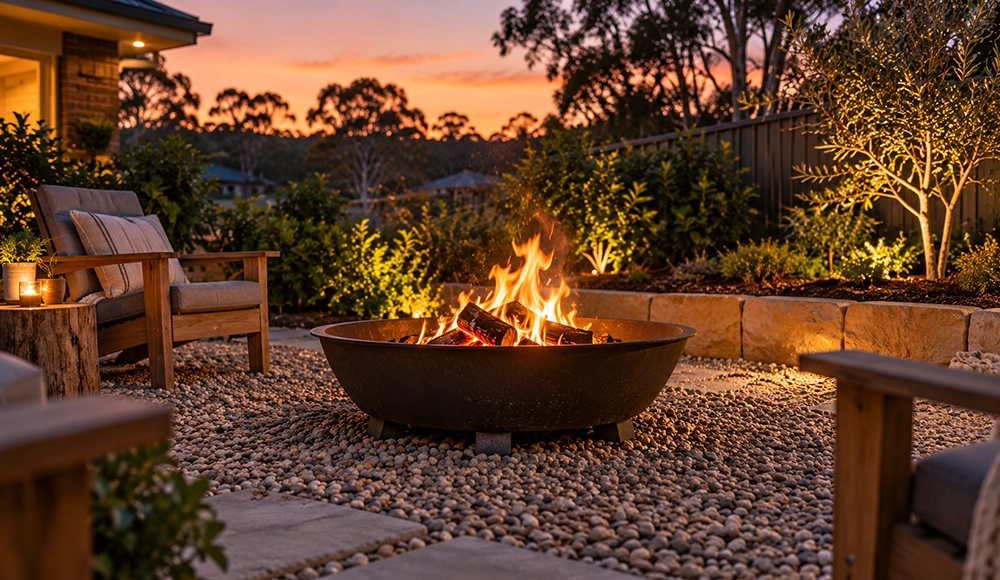
Bare, non-combustible ground for at least two metres. That figure comes from the RFS cooking exemption, and it makes a sensible minimum for any pit, even where the exemption does not apply. The NSW RFS Prepare Your Home factsheet makes the same point about the home generally. It says to use stones instead of mulch and to move garden beds away from the house.
A Pebble Or Gravel Floor
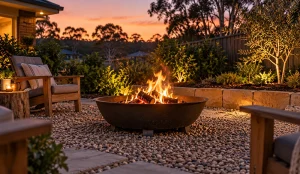
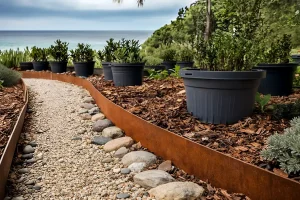
Stone does not burn, so it makes the natural floor for a pit area. The decorative pebbles range runs from Somersby Pebble at 10 to 15mm through to Nepean River 40mm Pebble. For a firmer pad underneath pavers, ¼ Minus (Crusher Dust) is the yard’s compactable underlay.
Keep Mulch And Timber Back
Mulch, treated pine edging and timber furniture all belong outside the cleared ring. Where the pit area needs a defined edge, SHAPESCAPER steel garden edging holds the stone in place without adding anything that burns.
The Best Firewood For A Fire Pit
Dry seasoned hardwood. The NSW EPA’s dos and don’ts of wood heating says to burn only dry seasoned hardwood. That advice targets heaters, but the logic holds outdoors, because wet wood smokes wherever you burn it.
The NSW EPA’s dry wood checks come down to two quick tests. Strike two pieces together and listen for a loud, hollow crack. Alternatively, tap a log with a key or coin: dry wood gives a sharp, resonant sound and wet wood a dull one.
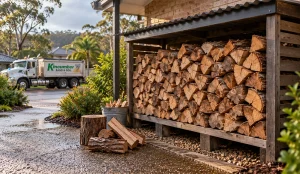
Kincumber Sand & Soil sells its firewood in 20kg bags, which suit an occasional fire pit. Half and full cubic metre buckets suit anyone burning most weekends.
Setting Up A Fire Pit Area This Summer?
Measure the cleared ring first, then the stone to fill it. From there, the team can turn those measurements into a quantity and sort the pebbles, crusher dust and firewood in one trip. Contact Kincumber Sand & Soil or call (02) 4368 1252.