
Top Dressing Lawn Central Coast searches almost always come with a second question attached: how often, and when? The honest answer is that the lawn tells you rather than the calendar. Still, there is a right time of year to act once it does.
So this covers the signs that say a lawn is due, the window that suits the Central Coast and which product goes on. The last one matters more than most people expect, because the wrong material does nothing useful.
How Often Should A Lawn Be Top Dressed?
As often as it needs levelling, and no more. Top dressing fixes two things: an uneven surface and tired soil underneath. Neither runs on a schedule, so the lawn sets the frequency.
Most home lawns on the Central Coast end up on a once a year rhythm at most. A newly laid lawn on well prepared ground might go several years without needing it.
What Tells You It Is Due?
Four things, and any one of them is enough.
Hollows that hold water after rain, so the mower scalps the high points. A spongy layer of old clippings and runners sitting above the soil. Bare patches that keep coming back in the same spot. Or soil so hard underfoot that water runs off rather than soaking in, which is a compaction problem rather than a surface one.
Can You Overdo It?
Yes, and this is the common mistake. Each application adds depth over the growing points, so repeated heavy layers bury the lawn rather than feeding it.
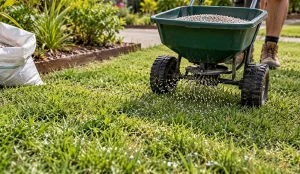
Thin and even beats thick and generous. Spread it so the grass tips still show through, then let the lawn grow up into it before adding any more.
When In The Year Should You Do It?
Spring, mostly, with early autumn as the backup. Top dressing works when the grass is actively growing, because the lawn has to push up through whatever you spread on it. A lawn going in from scratch follows a similar calendar, which the best time to lay turf covers separately.
Why Spring Suits The Central Coast
Local climate figures make the case. The Bureau of Meteorology climate averages for Gosford AWS show mean monthly maxima climbing through spring. September sits at 22.2 degrees, October at 24.3 and November at 25.2, on a record running since 2013.
September is also the driest month on that record, at 63.0mm against an annual 1,325.3mm. Warming soil and settled weather together make spring the practical window, as long as you can water.
What About Autumn?
It works, but watch the rain. The same station records March as by far the wettest month at 214.9mm, with April second at 153.0mm. A fresh top dressing layer in heavy rain washes into the low points you were trying to fill.
So early autumn, once March has passed, is the safer half of that window.
Watering After You Spread It
This is where the local rules matter. The Central Coast Council water restriction levels are tied to dam storage. Level 1 starts at 50 per cent and Level 5 at 25 per cent. So check which level applies before planning a job around sprinklers.
Under the Central Coast Council Level 1 rules, sprinklers and watering systems may establish a new lawn or garden for 14 days from installation. After that they may only run before 10am and after 4pm. Bore water and recycled water are not restricted at all.
What Should You Top Dress With?
Not garden soil, which is the single most common error. A turf topdressing has to be free draining and fine enough to work down between the blades. Garden soil holds water and sets hard on a lawn, and the difference between topsoil and garden soil goes through why.
Nitro Top is the yard’s product for this job, listed as a high performance turf topdressing composed of sand and fine Nitro-Humus. It sells by the cubic metre or in 25 litre bags. Top Dress is a different product. The yard lists it as screened soil for general landscape applications, sold by the tonne, which makes it a levelling and bulk fill material rather than a lawn dressing.
Worth checking the soil underneath while you are at it. The NSW DPIRD healthy soil guide puts the target range for most plants at pH 5.5 to 6.5 on a kit test. A lawn that struggles every year despite dressing may have a soil problem rather than a surface one.
Which Product, And How Much?
Top dressing lawn Central Coast jobs are smaller than most people expect. Work on area first, then keep the layer thin. A 100 square metre lawn takes roughly one cubic metre at 10mm, so most jobs run to a single metre.
The yard also stocks Grassmaster lawn fertiliser in 25kg bags. Bulk loads deliver across the Central Coast on the yard’s own tippers. Because the yard at 4 Kerta Rd, Kincumber is a drive-through, a trailer never reverses.
Not Sure Which Mix Your Lawn Needs?
Describe the lawn and what it is doing. Then the team will say whether it needs a dressing, a soil fix or just a feed. Contact Kincumber Sand & Soil or call (02) 4368 1252.