Pick Up Or Delivery Central Coast customers weigh up on every job, and the load usually settles it rather than the budget. Landscape supplies come either way, whether it is a quarter metre of soil or four tonnes of road base. One way saves a fee. The other saves four trips and a sore back.
So here is what fits in a trailer, which products only come one way, and what a tipper needs before it turns into your street.
Which One Suits Your Load?
Two things decide it: how much you need, and whether a truck can reach the spot. Everything else is detail.
Pick It Up When The Load Is Small And You Are Towing
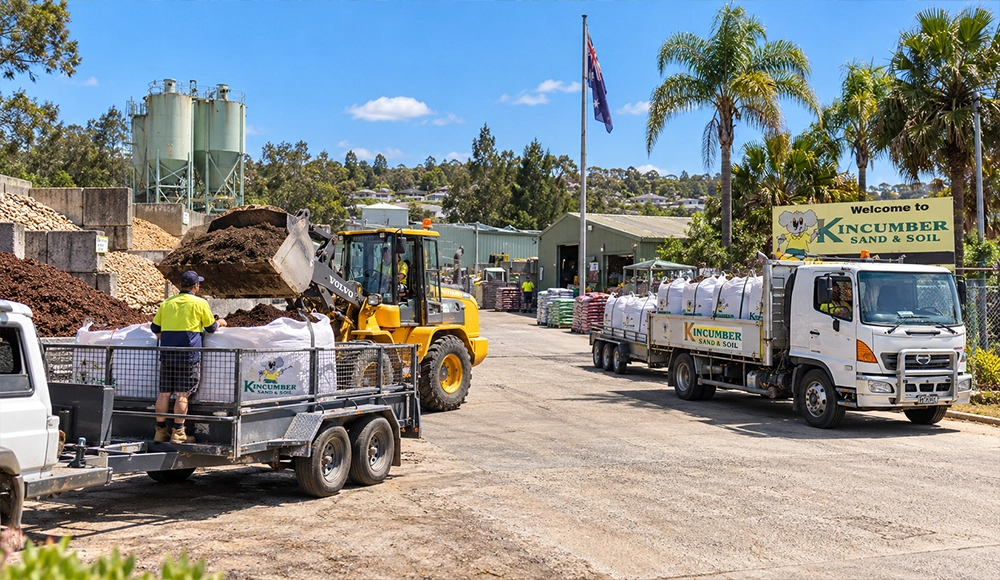
Up to about a cubic metre is trailer territory. The yard at 4 Kerta Rd, Kincumber suits it, because a drive-through means a trailer loads and leaves without reversing.
Pickup also wins when you want the material today, or when you want to see it before you commit. A soil blend looks different in the bay than it does on a screen.
Bear the hours in mind, though. The yard runs Monday to Friday 6:30am to 4pm and Saturday 6:30am to 12pm, then shuts on Sunday. So a Sunday job needs the trailer loaded on Saturday morning.
Have It Delivered When Volume Or Access Decides It
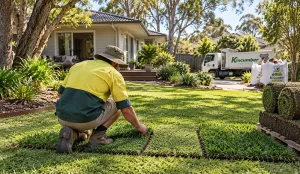
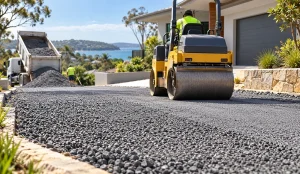
Past a cubic metre, a tipper beats three trips on both time and fuel. Deliveries run across the Central Coast on the yard’s own trucks, so one phone call replaces a morning of towing.
Delivery also wins when the job needs several products at once. A driveway taking road base and a topping arrives in one go rather than four separate runs.
What Will Actually Fit In A Trailer?
Less than the box holds, which is the part that catches people out. A trailer reaches its weight limit long before it fills to the top.
The Rating Is The Limit, Not The Box
Transport for NSW guidance on towing a trailer or caravan sets the ceiling at the lowest of four numbers:
- Towbar and coupling rating.
- Maximum towing capacity of the towing vehicle.
- Load rating of the trailer itself.
- Rated carrying capacity of the tyres.
So the lowest of the four is your real limit, and it is often the car rather than the trailer. Ordering bulk landscape supplies works through those figures and the brake thresholds that go with them. Tell the team the rating when you arrive and they will load to it.
Volume Or Weight, And Why The Unit Matters
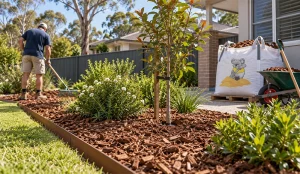
Products sell in different units, and that changes what a trailer can take. Soils and mulches sell by the cubic metre, which is a volume. Sands and quarry products sell by the tonne, which is a weight.
A cubic metre of mulch and a tonne of sand are nothing like the same load behind a car. Mulch is light and bulky, so volume runs out first. Sand is dense, so weight runs out first and the trailer still looks half empty.
Quarter, half and three quarter loads are all standard, so a small order is a normal order.
What Comes In Bags
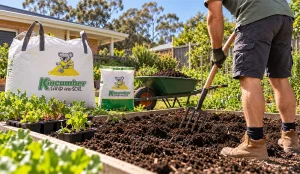
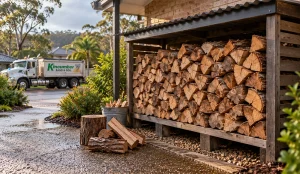
Most products also come in 25 to 30kg bags, which a car boot handles without a trailer at all. Firewood comes in 20kg bags as well as half and full cubic metre buckets.
So one garden bed, a pot or a repair needs no tow bar. Bags are the quiet answer to a small job.
Timber Is A Length Problem, Not A Weight One
Sleepers are the one product where the trailer floor matters more than the rating. The treated pine range lists sleepers at 2.4m and 3.0m, round logs at 1.8m or 2.4m, then slabs and wing splits at 2.4m.
A standard 6 by 4 box trailer has a floor around 1.8 metres long. So a 2.4m sleeper overhangs it, and a 3.0m sleeper overhangs it badly.
What Delivery Needs From You
Two things, and both are worth sorting before you ring rather than while the truck idles.
Somewhere The Truck Can Reach
A tipper needs headroom to raise its tray and a clear run in and out. A low branch, a narrow gate or a car across the driveway can turn a delivery into a return trip.
So walk the route first and pick the drop as close to the work as the truck can safely get. Every metre saved is a wheelbarrow trip you never make.
Notice For Anything Non-Standard
Standard stock goes out quickly. The treated pine page asks for notice on different sizes, and lists H5 and ACQ treated timbers on request.
That matters for a bed growing food, since ACQ carries no arsenic. So ask early rather than the day before.
Where Can The Load Legally Sit?
On your own property, which is simpler than it sounds. The footpath and the roadway belong to Council, so Council controls what sits on them.
Central Coast Council’s Road Occupancy Licence application covers work needing traffic management. It names works on footpaths, and skip bins placed on the footpath or roadway. That page does not name loose material, so ring Council on (02) 4306 7900 before planning on the verge.
What Happens To What You Dig Out?
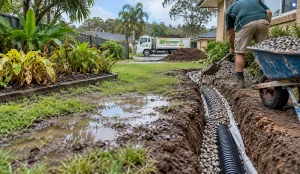
It goes to a waste facility, and that trip is worth planning alongside the delivery. A new bed or a driveway base generates spoil, and a suburban block has nowhere to hide a cubic metre of old clay.
Central Coast Council’s list of waste facilities names Buttonderry at 850 Hue Hue Road, Jilliby and Woy Woy at Nagari Road. Both take uncontaminated soil and garden organics for a fee. Both open 7am to 4pm Monday to Friday, then 8am to 4pm on weekends and public holidays.
Council also lists the Kincumber site as closing as a waste transfer station. So the nearest option for a Kincumber job is no longer around the corner. Ring Woy Woy on (02) 4342 5255 to check fees first.
Timber offcuts are the exception. The NSW EPA treated timber chart rules out burning or burying treated timber, so cut-offs go to the facility rather than the fire pit.
Still Not Sure Which Way To Do It?
Say what you are buying, how much of it, and whether you have a trailer and a tow bar. Then the team can settle pick up or delivery in one call rather than two.
Get in touch with Kincumber Sand & Soil or ring (02) 4368 1252. The yard sits at 4 Kerta Rd, Kincumber NSW 2251, open Monday to Friday 6:30am to 4pm and Saturday 6:30am to 12pm.