How To Choose Mulch For Your Garden comes down to one question asked before any product name: what is this mulch actually for? Weed control, water saving, feeding the soil and looking tidy all point at different products. A mulch that excels at one can be a poor choice for another.
So this works through it by job rather than by catalogue. Each section takes a common situation and names what suits it, from the range the Kincumber yard actually carries.
What Is The Mulch Actually For?
Start there, because it narrows the field immediately. Mulch does four jobs, and few products do all four well.
Fine mulch knits into a dense mat, which is what blocks light from weed seed. Coarse chip stays open and holds its shape, so it looks good for longer and shrugs off wind. Bark holds colour. Baled products are the ones sold for vegetable and annual beds rather than for permanent cover.
The Australian Government’s review of recycled organics standards puts a useful frame around this. It notes that AS 4454 sorts products by particle size into three classes: soil conditioner, fine mulch and coarse mulch. Those classes track the jobs fairly closely.
Which Mulch Suits A Vegetable Bed?
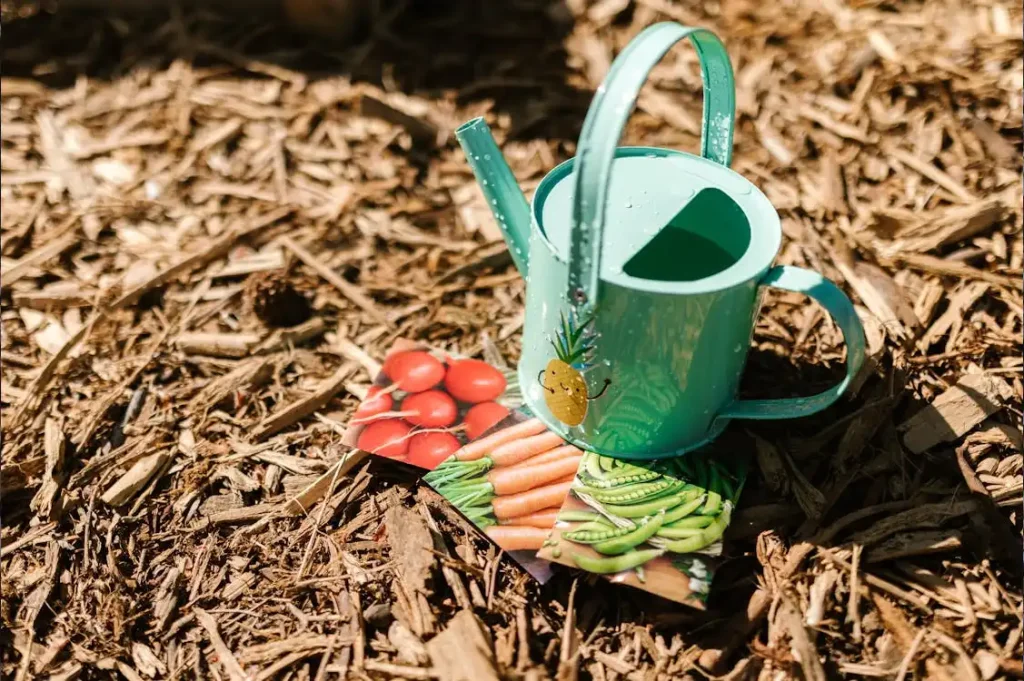
Something that breaks down quickly, because a vegetable bed wants feeding rather than covering. Baled product is the usual answer here. Sugar Cane, Tea Tree and Lucerne all come in bales, and the yard groups them separately from the bulk range for that reason.
Lay it thinner than you would on an ornamental bed, because seedlings need to push through it. Then top it up between plantings rather than all at once.
Hardwood chip is the wrong choice in a vegetable bed. It sits in the coarse class, built to hold its shape rather than to feed, which is the opposite of what a vegetable bed needs.
Which Mulch Suits Native Plants?
Bark or chipped hardwood, and the reason is phosphorus. NSW DPIRD’s healthy soil guide states that native plants are very sensitive to phosphorus. So anything that feeds heavily as it rots is a risk.
Inner West Council’s native garden guide goes further and gets specific. It advises choosing an organic mulch made from bark or chipped hardwood rather than pine chips, spreading it about 10cm deep and topping it up annually. It also warns against chook manure, which often carries high phosphorus.
In the yard’s range that points at Red Hardwood Chip at 20mm to 25mm, or Leaf Mulch, which is chipped tree trimmings containing hardwood and leaves. Both sit at the coarse end of the range, which is what that advice points at.
Which Mulch Looks Finished And Stays Put?
Bark and coloured products, because they hold their appearance. Pine Bark comes in 10mm or 25mm and the yard describes it as keeping its colour, suited to a forest floor look. Red Hardwood Chip carries an enhanced red colour. Black Coloured Mulch comes in 50 litre bags for smaller feature areas.
Front gardens and anything near a path benefit from the coarser grades. Fine mulch scatters onto paving and needs sweeping back, while chip tends to stay put.
Does Termite Resistance Matter?
Near a house or a deck, it is worth considering. Cypress Mulch and Cypress Chip are both described on the yard’s product page as long lasting and termite resistant, and both come from sawmill residues in a honey colour.
That is a product characteristic rather than a termite treatment, so it does not replace proper advice about a building. Near garden structures and away from the house, though, it is a sensible default.
One Rule That Applies To Every Choice
Keep it off the stems. Central Coast Council’s landscaping standard drawings repeat that instruction alongside their depth figures, and the Inner West guide says mulch should never be placed right up to the stem of any plant.
The reason is rot, fungal infection and insect attack at the collar. So whichever product you land on, leave a clear gap around each trunk and stem.
How Much, And Where From?
How to choose mulch for your garden settles the product, and the volume is then simple arithmetic. Working out how much mulch you need covers the calculation and the depth to use.
If weeds are the main reason for mulching, that deserves its own answer, and the best mulch for blocking weeds deals with it in detail. For a mixed job, the full garden range covers the soil and edging that go in alongside.
Still Not Sure Which One?
Describe what is growing in the bed and what is bothering you about it. Then the team at 4 Kerta Rd, Kincumber will point at the right product rather than the most expensive one. Contact Kincumber Sand & Soil or call (02) 4368 1252.