How To Build A Garden Bed Central Coast projects usually stall at the same point. The timber is bought and the spot is chosen. Then nobody is sure how tall to make it, or what goes underneath.
So this runs the build in order. Where it goes, how high, which material for the walls and what lines the base. The soil that fills it is a separate question and it has its own answer at the end.
Where Should The Bed Go?
Wherever the sun is, within reason. Most vegetables and flowering plants want a good part of the day in full sun. So the shaded strip behind the shed is the wrong spot, however convenient it looks.
Two practical constraints matter as much as sunlight. Keep the bed within reach of a hose, because a bed you have to carry water to stops getting watered. Then leave room on at least one long side to work from. Reaching across a wide bed from one side gets old fast.
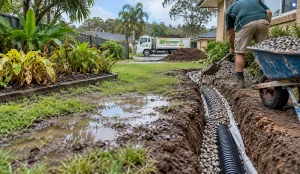
Check what the ground does after rain, too. A bed built on a spot that already holds water will stay wet, and raising it only helps so much. Where that is the problem, garden drainage solutions deals with it properly.
How Tall Should It Be?
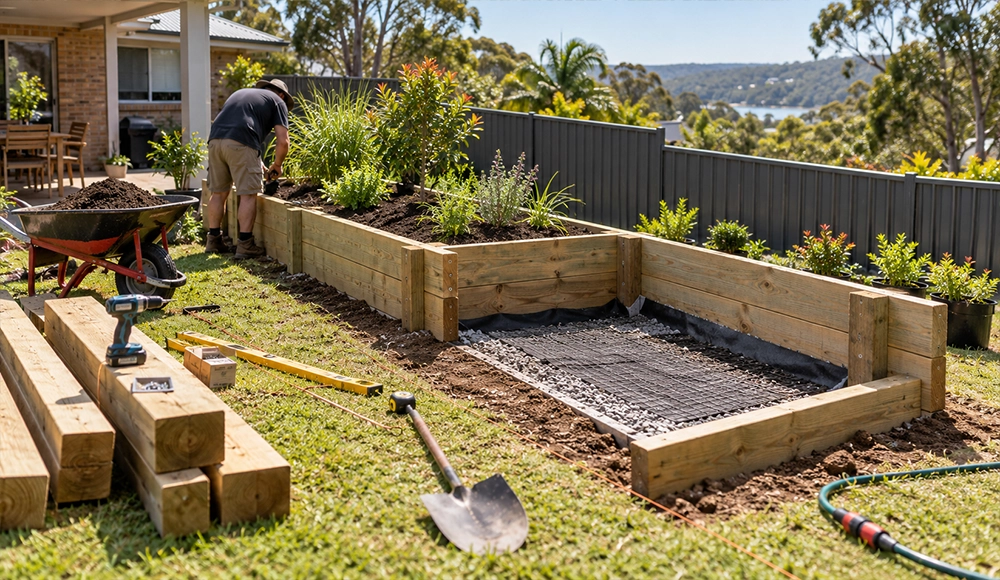
At least 300mm, and taller for bigger plants. That figure comes from NSW EPA guidance on gardening where soil may contain lead. It sets out three things for a raised bed. Build it at least 30cm tall, higher for large plants. Line the base to allow drainage while preventing soil mixing. Then fill it with certified clean soil.
That advice carries extra weight locally. The EPA names lead paint around the home as the reason to stay careful. Plenty of older weatherboard and fibro houses here carry paint from well before the phase-out. A bed at 300mm on a lined base with imported soil sidesteps the question entirely.
Height also decides how much soil you buy, so settle it before ordering anything. A bed 3 metres by 1 metre at 300mm takes close to a cubic metre.
Which Material For The Walls?
Three options get used. The choice comes down to the shape of the bed and how long it has to last. Straight runs and curves pull in different directions here.
Treated Pine Sleepers
The usual answer, and the cheapest per metre. Treated pine comes in nine sleeper sizes. So a single-tier bed at 300mm is two courses of 150mm, or one course of a deeper profile.
The hazard class matters more than the size. The NSW EPA treated timber chart rates H4 for outside, in-ground use and names landscaping timbers among its typical uses. For a bed growing food, though, ask for ACQ instead, which carries no arsenic. Treated pine sleepers sets out the classes and what each is rated for.
Steel Edging
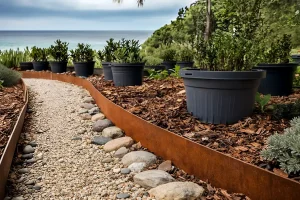
The option for a curved bed, because timber will not bend. Steel edging comes in eight profile heights from 75mm to 590mm. A 290mm or 390mm profile therefore builds a raised bed in one piece rather than courses.
It also sits thinner in the ground. That matters on a narrow bed, where two courses of sleeper would eat the growing space.
The Council Timber Detail
Worth copying if you are building in timber, because it is specified properly. Central Coast Council’s landscaping standard drawings include a garden edges detail. It uses a 38 x 100 timber edge board at 2400 long, held by 50 square pegs 450 long at 1200 centres. The pegs finish 25 below the top of the boards.
That peg spacing is the part people guess at. Pegs at 1200 centres is what stops a long run bowing outward once the soil goes in and gets wet.
The Build, In Order
Six steps, and the order saves rework rather than time.
- Mark the footprint with a string line and check it is square before cutting anything.
- Clear the turf and weeds inside the footprint, right down to bare soil.
- Level the ground where the walls will sit, because the walls set the level for everything above them.
- Set the corners first, then the runs between them. Fix with galvanised or stainless steel fasteners so the joins do not rust out.
- Line the base, which is the next section.
- Fill, water in, then top up once it settles.
What Goes On The Base?
Mesh rather than plastic. The EPA guidance above calls for lining the base to allow drainage while preventing soil mixing. A sheet of plastic does the second job while blocking the first.
Galvanised mesh or a woven weed mat lets water through. It also stops the bed’s soil mixing with whatever sits beneath it. On a bed over paving or compacted ground, add a layer of coarse gravel under the soil to help it drain.
Do not line the sides. The timber or steel needs to breathe, and a lined wall holds moisture against it.
What Goes Inside?
Not straight topsoil, and this is the decision that makes or breaks the bed. A raised bed has no subsoil underneath to draw on, so whatever goes in is the entire root zone.
Council’s own specification puts topsoil for mass plantings at 200mm to 300mm. It also rules out compacting it by any means beyond light firming, which is worth remembering when the urge to tread it flat arrives. For the blend itself, what to fill a raised garden bed with goes through the products and the proportions. The organic top dress soil range is where they sit.
Building several beds as part of a bigger job? The backyard order of works sets out where bed building falls in the sequence.
Ready To Price The Timber And Soil?
Bring the finished dimensions and the height you have settled on. Then the team can work out the sleeper count, the fasteners and the soil volume in one go.
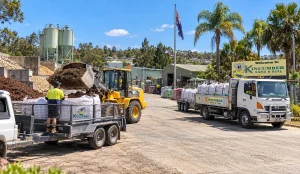
The yard at 4 Kerta Rd, Kincumber is a drive-through, so a trailer loads without reversing. Larger loads also deliver across the Central Coast. Get in touch with Kincumber Sand & Soil or call (02) 4368 1252. Open Monday to Friday 6:30am to 4pm and Saturday 6:30am to 12pm.